This is some experimental text. How does it look?
Seventeen
Jonathan Weisberg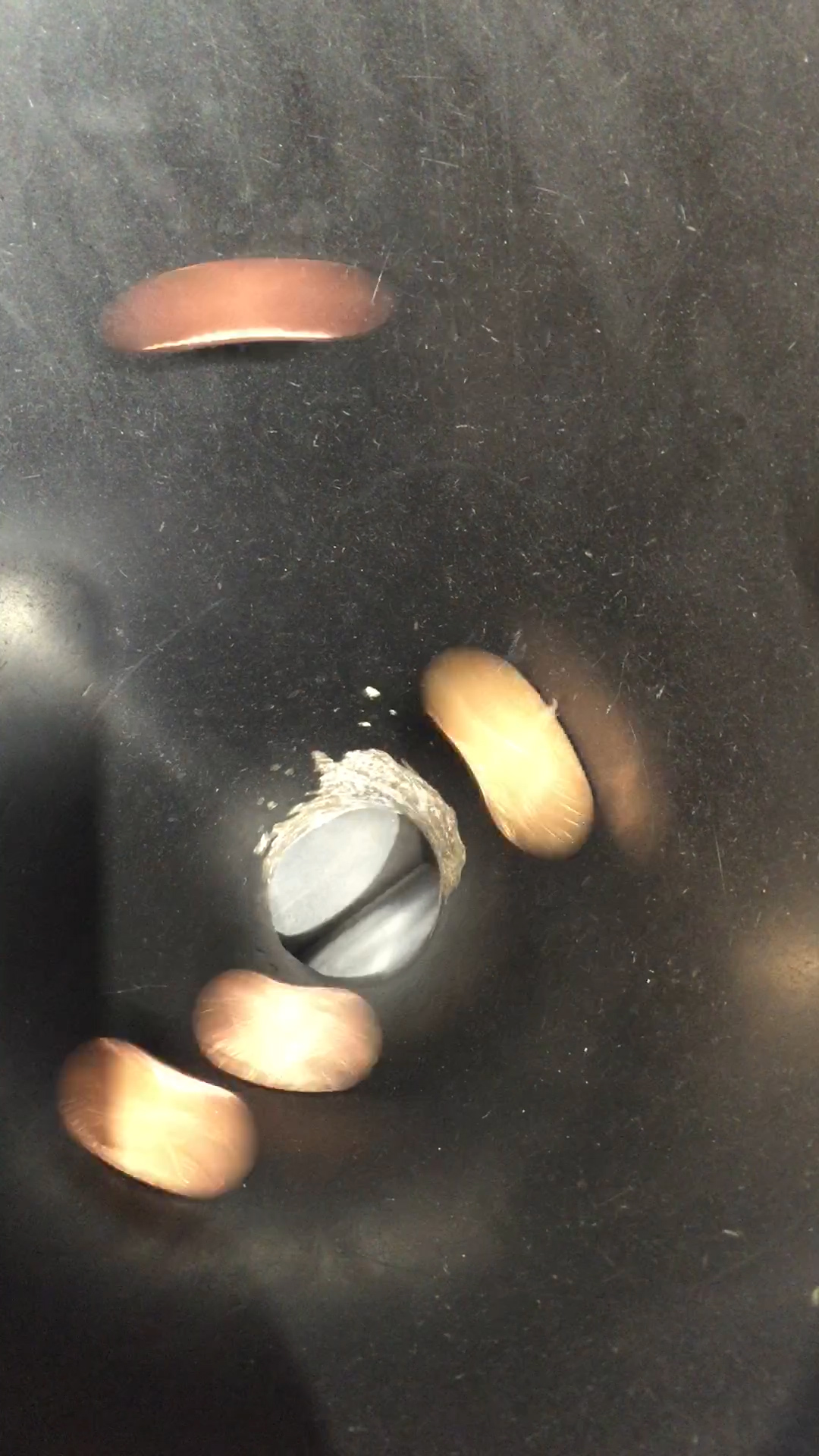
Sixteen
Jonathan WeisbergSo, what is this organism? I hypothesized that it existed before submitting myself to the commune. And here it is. I can see it in numerous video microscopy studies. Clearly a protozoa—ovoid, flexible, twisting and shuddering to move blindly through its medium, my blood in this case. It appears almost gold in these studies because of the dye they’ve used. We don’t yet have any hint how it’s different from a dozen or so other species that are very similar. We don’t know why it’s emerged just now to have this effect on human beings.
We are working to run the full sequence of its genetic code, but that will only be the first step. This will take a long time. Because of what I did, we’re well ahead of any other lab. We’ll need to stake our claim, move as quickly as we can. There’s enough here for a series of papers.
Fifteen
Jonathan WeisbergThe treatment should be done in another two weeks or so.
Fourteen
Jonathan WeisbergReally, they are all my subordinates. This is my lab. I worked hard and long to build it. It was my life. It was my whole life.
They tell me that everything is happening as I had thought it would. They say the values in my blood are returning to normal, as I had predicted before this all happened. They’ve isolated a novel protozoa in the samples they took from me, and they are culturing it. They don’t know more yet. How it moves through the body, what kinds of cells it invades, whether it releases a previously unknown compound.
These are the questions I once cared about.
I asked for more information about what they’re discovering about my condition, and they’ve brought me a computer with which I can access all of the lab’s results. I recall my old passwords. I can move familiarly and fluidly through the data and manipulate images and other findings. This feels as much like an instinct as a learned skill to me now.
I see the values that represent my condition, and I understand that the organism has almost been cleared from my system. It was at 52 ppm when I was taken from the commune. It’s now under 3.
Thirteen
Jonathan WeisbergMy persecutors—or now I might call them caretakers—still wear their protective suits. They are afraid of the infectious agent I carry. I recognize their precautions. I’ve used the same suits in certain field work. Outside the door to the lab is a negative pressure room, where they can remove their suits and place them directly in a biohazard disposal bin, then scrub down in a sink. There’s also a shower in case it’s needed.
But we have started to talk. I recognize them as my partners and coworkers in the hazy way I see everything that came before the commune. I’m looking through a curtain of light at a world of differentiated shadows.
Twelve
Jonathan WeisbergThe treatments still occur every six hours. Now I sit voluntarily on the stretcher and allow them to draw my blood and administer the injection. This is an indication of the success of the treatment. My ability to sense the love of the commune weakens. I feel like the Earth cooling in the millennia following its magma-hot creation. My memory of other times strengthens. My reason, my scientific, empirical mind rises. But every thought beyond that love I once knew brings pain.
I still feel ruined.
Eleven
Jonathan WeisbergThe experience in the commune in many ways exceeded the powers of description. I don’t believe anyone else has ever reported on it from the inside, so I must try.
The feeling was so completely filling. There was no room left—in my heart, in my thoughts, seemingly in the universe—for anything else. Even now, when all I know is distance, a distance I sometimes don’t think I will ever be able to cross, I know it was the strongest force I’ve ever touched. I beheld the power of the sun burning and raging in every human heart, all inhibition lifted.
Each person was beautiful, so indescribably, perfectly beautiful, because their faults no longer meant anything. They came to you pulsing and burning with that truth you shared. They were that complete love. You were that love. The closer you were to each other, the more you felt the presence, the immensity, the surety of that love. And as there were more people, you felt surrounded, completely immersed, completely joyful and without worry. Each soul to join the commune brought a share of this love and nothing else mattered.
If I think of the practices on the commune in the terms someone from the outside might use, I understand the outsiders’ fascination and disgust. Did a man penetrate me as we sought this union? Yes, as did women, as did I to others. But it did not mean what it would mean outside. It wasn’t an interaction with some other individual; it was an effort to touch the immense burning love behind them, behind all of us. Present within each of us.
I weep at night when I think of my separation.
Ten
Jonathan WeisbergI am my own torturer. The me from the past leans over and cinches the bonds tight to keep me here—for reasons that once were my own.
Nine
Jonathan WeisbergI start to see this room as more than the wall that contains me. I see the cot in the corner with sheets, blankets, and a pillow. I have lain on it many, many hours, but now I see it is here for a reason—as the result of planning.
The medical bed with restraints and the apparatus to deliver medication is also here because someone planned for my tenancy.
I see that there are benches set into the walls on two sides of the room, with sinks and cabinets in them. These are now empty. I find, however, that there are books on some of the shelves—textbooks, reference works, writings on cells, genetics, the mechanics of life. When I page through these I almost feel the wonder of discovering a new world, as Adam and Eve might have felt. But I also remember all of this from the past before the commune.
I remember because this is my lab. I had the bed placed here. I have read all these books before. I know the people who come to me in their protective suits. They were once my life.
I am my own torturer. The me from the past leans over and cinches the bonds tight to keep me here—for reasons that once were my own.
Eight
Jonathan WeisbergThis journal was placed here for me, anticipating that I would use it as I am now doing.
Seven
Jonathan WeisbergThe people in the yellow suits—my fellow scientists, I would have called them once—ripped me open without remorse, without probably having any idea what I suffered. They placed me in the back of an ambulance. Four of them rode with me, first working to restrain me and, once I was secure, beginning the invasions of my person that they needed for the experiment. In other words, they removed my clothing, drew blood, took swabs of my skin, nose, ears, anus, and vagina, and measured all my vitals.
Six
Jonathan WeisbergThe light had moved through the commune, passing over many faces caught in the contemplation of that love that I can still feel in my core, diminished though it might be. For some reason, the light stopped on me, separating me out.
Then the people in yellow suits. So many of them, at least a dozen. They grabbed me. They pulled me away. As I realized what was happening, the pain—the pain was as great as if I had been grafted to the others in the commune, skin stitched to skin, perhaps deeper, tissues joined to tissues. The pain ripped me open.
Five
Jonathan WeisbergBut in the moments I am myself, I am more myself. I remember more of what happened. I think in careful steps, leading from the known past into the hazy future, following a route of causation, effect, and implication.
But other times I think only of my loss. I hold my knees against my chest. I look over the wall, the ceiling, the door. I look for the way out.
Memory becomes more pervasive, as a tide rising and filling a hollow in the rocky shore. I can look at what has happened to me.
I remember the beam of light that found me in my bliss. That is the moment that preceded and led to this place.
I had been in the commune some time. I can’t recall how long. The experience of time was so different there. But I know it must have been 21 days. That was the program I set out before entering the commune. I’m sure of that.
Four
Jonathan WeisbergBut if you gave me the choice this instant to either stay here in comfort or to run out that door, naked, penniless, defenseless, to seek that embrace I miss so much—I would go without a thought. There is nothing else that can matter to me.
All else is despair in comparison.
Three
Jonathan WeisbergTo be torn from that is maddening. To know it lives on the other side of this impenetrable wall is heartbreak, torture, madness, suffering that makes death seem a sweet promise.
Who sentenced me to this? I did it myself to myself. I know that.
The treatment occurs every six hours, exactly, without exception.
When I know myself, I understand this. I can explain it. The level of medication in the blood has to be managed very carefully. Too much would be toxic to me. Too little and the organism will survive, possibly become more robust.
But each time the door clanks and I see the bodies in yellow suits of untearable fabric (I have tried its strength) and then the plexiglass masks that turn the faces behind them to distorted whorls of pink, the need to get away is all there is. As if that insistent heartbeat I hear from a distance rushed in through the open door and swelled to make the air shout, I charge toward the opening in the door.
They hold me securely. I lash, but there are many of them. They pin me on a stretcher. One takes some blood from my arm and another pushes a syringe into the meat of my thigh.
There’s a sedative in there, or else I would rush with them to the door, and they would have to beat me back to keep me in this room any longer.
Suddenly unbalanced and lethargic, my body pins me down, and I watch hope wink and extinguish in the hastily shut door.
Why do I record this now? Why do I, or the remnant of me that survived being torn from all meaning, write when the exercise seems so paltry and fruitless compared to the enormity I have known? I cannot write of that known secret—it cannot fit in words. To try is desecration. Much of the time I do not care for anything on this side of the wall. I only long to rejoin… But at other times, for a few minutes, like the quiet mouse stepping amidst sleeping lions, this other clear-minded self takes the pen. It is the wish of my other self, my past self, to observe what I am now experiencing. It is the desire to know. That is why I did this to myself in the first place.
The treatment is having the effect my persecutors would wish. (Let us not forget that I, myself, am one of these persecutors. Indeed, I laid out this regimen. I must have. I would have wanted to control this exactly.)
The love that once felt so heartbreakingly near is sometimes as dubious as any memory. I could almost imagine life without it.
Two
Jonathan WeisbergAnd to be torn from that—
I was torn from that.
I’ve exhausted myself assaulting the wall. When I first woke here, or first remember waking, I could think of nothing but that love I’d been torn from. I threw myself against the wall. Injury meant nothing. Reason’s insistence that my fingers cannot penetrate steel and stone did not slow me. With exhaustion, my body collapsed, and only then did I think to search for a weakness. I ran my hands over the seams in the wall. I probed the meeting of floor and wall all the way around my room. I did it again and again. I shook the door and yelled into the little slot, through which I could feel fresh air.
I do not know how long I have been here. A day? Two? Some heap of hours.
I have only rarely understood who I am.
It does not matter next to the thought of what I have left, what I have been torn from—I have been torn from such love. Such love. Such fullness.
And at the thought of it, I again lose myself. I am again clawing at the door, at the bare walls, as if there were some way to again lay my cheek against the bosom that is all the love of all of humanity over all of history. The full sweetness you would think could never be unless you knew it.
One
Jonathan WeisbergI can feel it somewhere on the other side of the wall, as insistent as a heartbeat. Often it is all I know. A love that once held me as sweetly as a mother’s first sigh. A love that precedes all questions, all doubts, all knowledge. A love that fills you to the edge of possibility.
Hello world!
Jonathan WeisbergWelcome to WordPress. This is your first post. Edit or delete it, then start writing!